Reference path with explicit transport state; bit-perfect when the active output remains on a supported native PCM or DSD/DoP path.
NeuraMuse · Audio transport for Windows & macOS
Your music.
Your DAC.
Four ways to hear it.
Play PCM and DSD through your own system. Stay on the reference path in DIRECT, switch to TUBE, VINYL or AURA when you want a different presentation, and LINK Windows, macOS and iPad when you want the same programme in another room.
PCM + DSD
DIRECT · TUBE · VINYL · AURA
Windows · macOS · iPad LINK
Windows 10/11 x64 · automatic WASAPI standalone fallback · native ASIO for Windows DSD / LINK · CoreAudio on macOS
Current Transport Evidence exposes the reference-path payload state; supported DIRECT paths also perform end-of-track verification.
Either desktop platform can lead; the other can join and render locally.
Control a Master or join the LINK room as a synchronized endpoint.
The new desktop interface
The engineering dashboard has become a listening-first player.
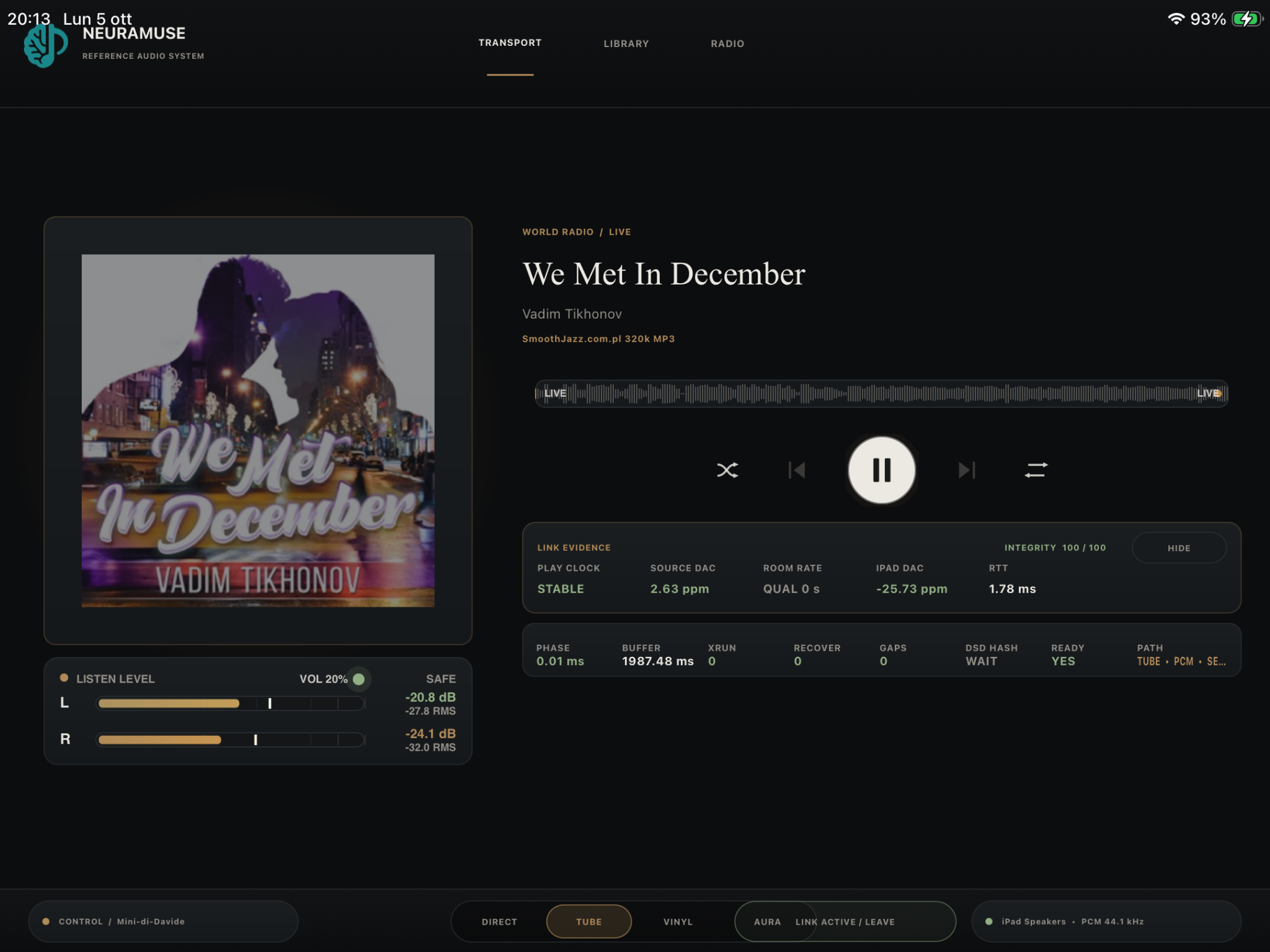
Transport, Library, Radio, TUBE, VINYL, AURA and LINK now share the same graphite-and-bronze visual language. These are current, unedited product captures; the audio architecture underneath is unchanged.
What NeuraMuse is
One player. One library. A reference path when you want truth — other paths when you want a choice.
NeuraMuse keeps source format, output device, listening path, room role and live transport state in one workspace instead of splitting them across separate tools.
PLAYBACK
PCM and DSD through the DAC you already own.
WAV, FLAC, MP3, DSF and DFF playback with the active source and output state visible while music is playing.
LISTENING
DIRECT, TUBE, VINYL and AURA without leaving the transport.
Start from the reference path, add analogue modelling when desired, or engage measurement-driven room correction.
ROOMS
LINK Windows, macOS and iPad around the same programme.
Each endpoint renders through its own local audio device while sharing the room state and programme.
Proof before promises
Current UI. Current transport state. Real hardware evidence.
Every screenshot below is tied to what it actually shows. DSD128 examples report 5.6448 MHz in NeuraMuse; the hardware example independently reports 5.64 DSD. LINK captures are identified only when LINK state is visible.
01 · DIRECT DSD128
5.6448 MHz DSD is visible in the current transport.
The current macOS UI reports DSD at 5.6448 MHz / 1 bit in DIRECT. The hardware badge in the hero is the matching DSD128 rate family: 5.64 DSD.
CURRENT UI · DSD128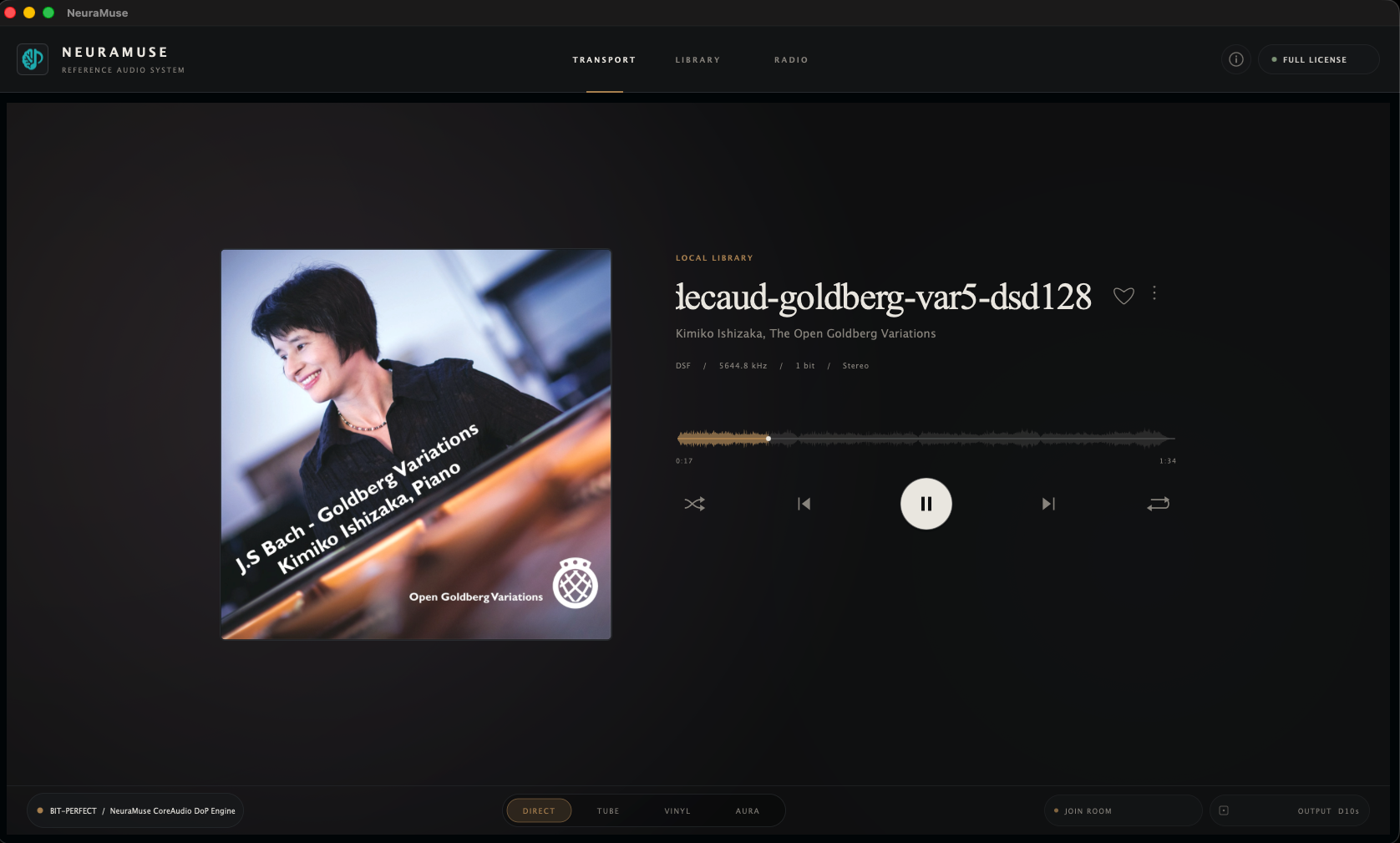
02 · TRANSPORT EVIDENCE
Payload-preserved state is visible.
The current Signal path view reports Bit-perfect · Payload preserved, XRUN / DSP late state and DAC clock information while the DSD128 LINK Master is running.
PAYLOAD PRESERVED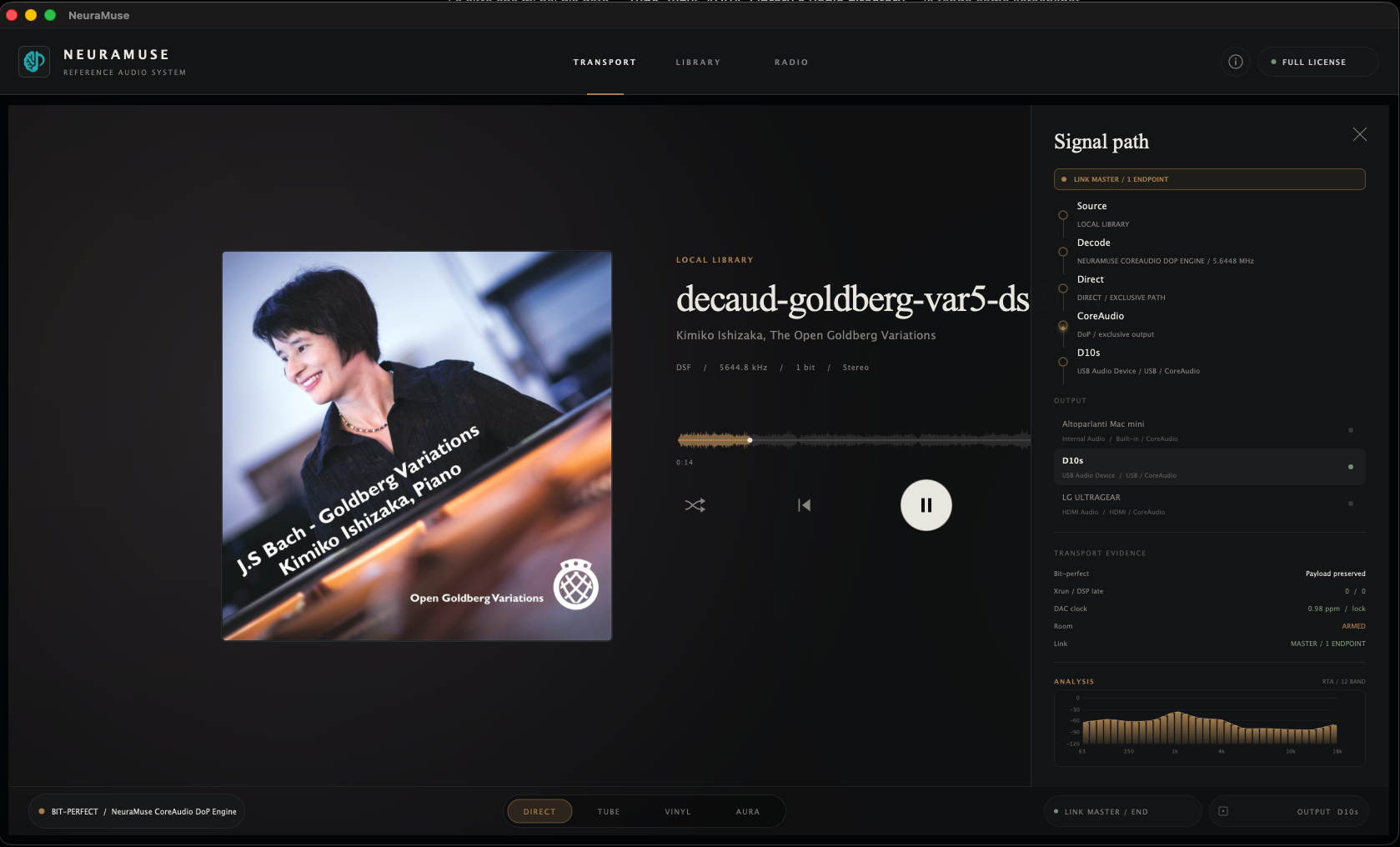
03 · LINK DSD128
The same DSD128 programme on Mac and Windows.
The macOS capture explicitly shows LINK MASTER / 1 ENDPOINT. The paired Windows capture shows LINK ACTIVE / LEAVE while playing the same DSD128 track through its local Raw ASIO DoP output.
MAC MASTER · WINDOWS LINK ACTIVEChoose the path
Reference when you want it. Character when you choose it.
All four listening paths live in the same player. DIRECT remains the reference; TUBE, VINYL and AURA are explicit choices rather than hidden “enhancement” switches.
DIRECT · REFERENCE
Hear the source through the reference path.
Use DIRECT for critical listening, native-rate playback where supported, format confirmation and comparison with the processed modes. In LINK, a joined endpoint whose DAC rejects the required DSD/DoP carrier can enter an explicitly reported PCM Compatibility path.
Explore DIRECT →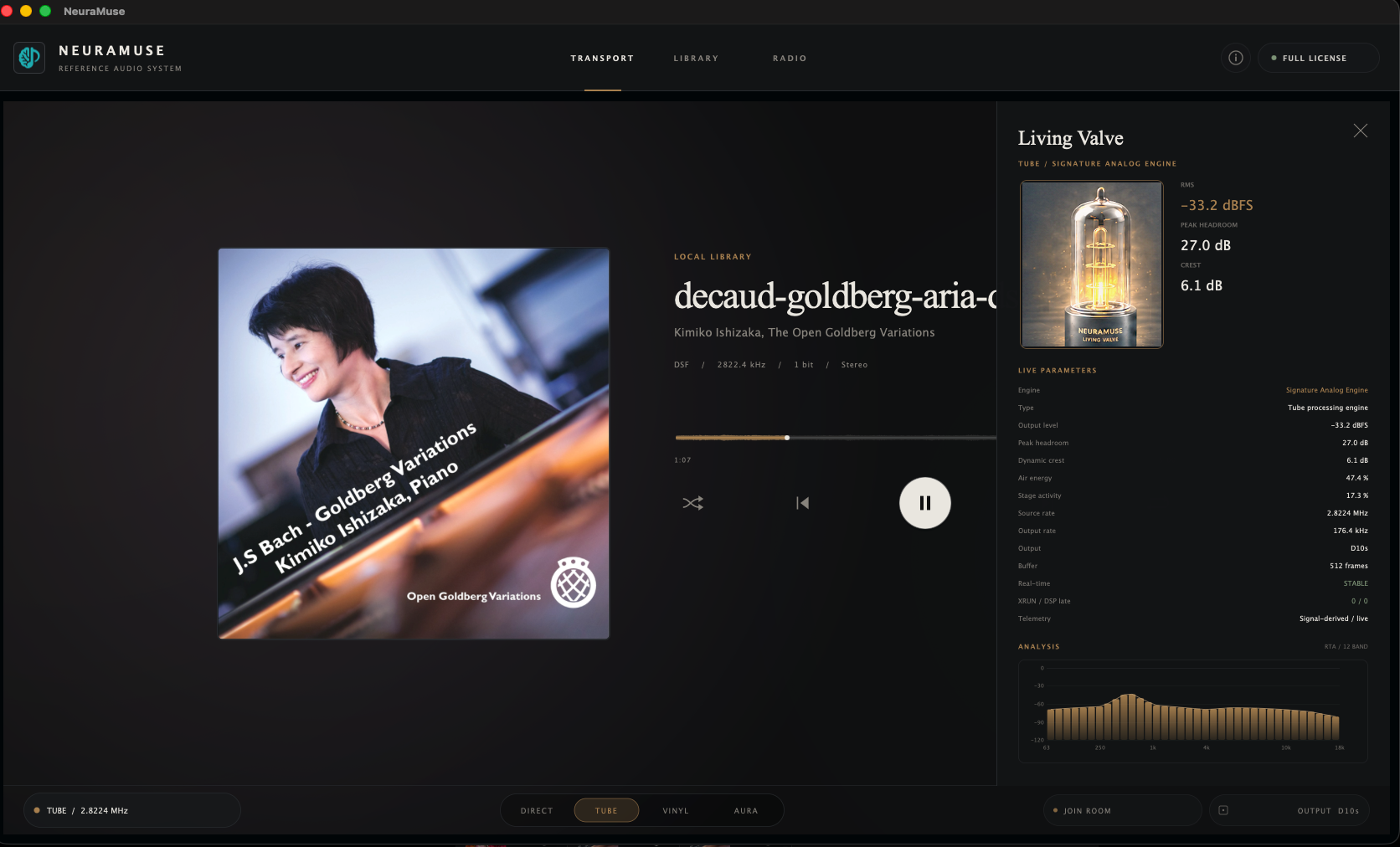
TUBE · LIVING VALVE
Dynamic valve character that follows the programme.
A level- and transient-sensitive valve-inspired model rather than a fixed warm EQ curve.
Explore TUBE →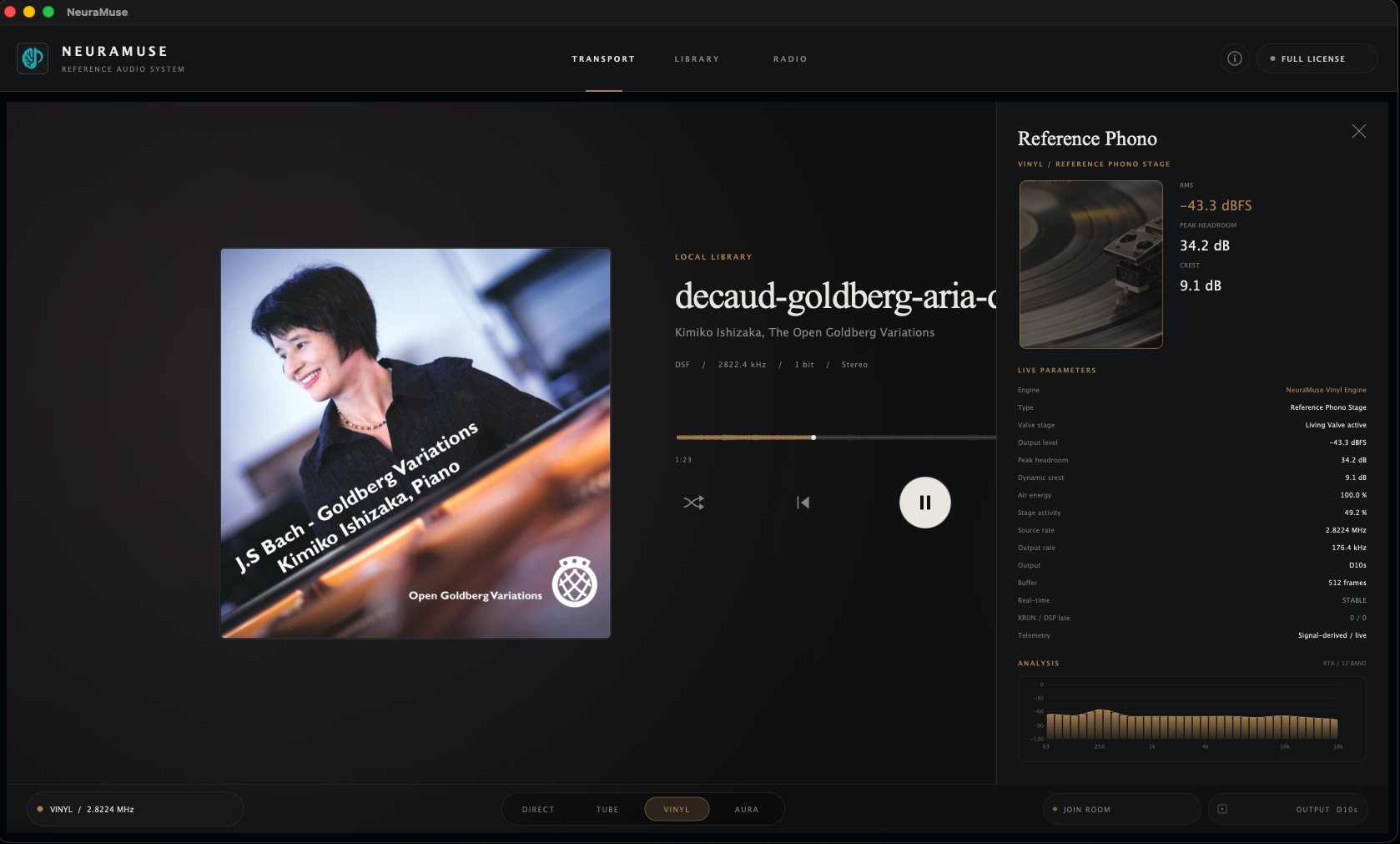
VINYL · REFERENCE PHONO
A modelled phono playback chain, not a crackle effect.
Mechanical and electrical behaviours form a dedicated path with its own live state and response.
Explore VINYL →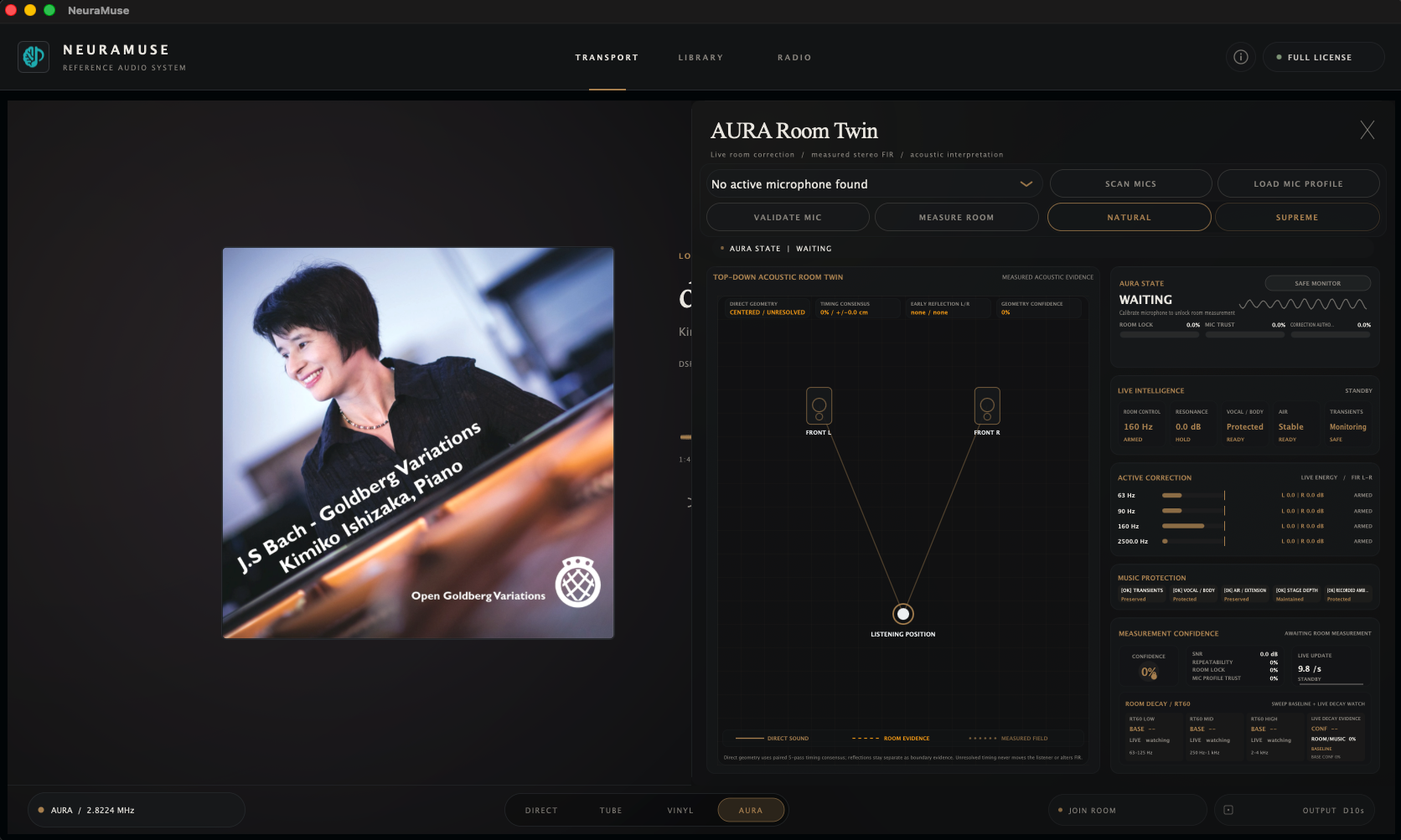
AURA · ROOM INTELLIGENCE
Measure the room, then correct it.
Microphone validation, room measurement and FIR correction combine in a dedicated room-aware playback path.
Explore AURA →NeuraMuse LINK
One programme. Multiple rooms. Either desktop platform can lead.
A Mac can host the room while Windows joins, or Windows can be the Master while macOS joins as the endpoint. Every desktop system renders locally through its own DAC/audio interface.
DESKTOP LINK HARDWARE REQUIREMENT · READ BEFORE TESTING
Every Windows or macOS computer participating in a LINK room must have its own compatible DAC or audio interface connected and working before the room is started. Two desktop computers = two DACs/interfaces. Three desktop computers = three DACs/interfaces.
Built-in/system audio may be usable for supported standalone playback, but it is not the supported desktop LINK configuration. On Windows, LINK also requires the manufacturer-provided native hardware ASIO driver. The iPad endpoint is separate and renders through its own local iPad output.
MASTER SYSTEMmacOS · DSD128 · 1 ENDPOINT
↔LINKSYNCED PROGRAMME
LINK ENDPOINTWindows · DSD128 · ASIO
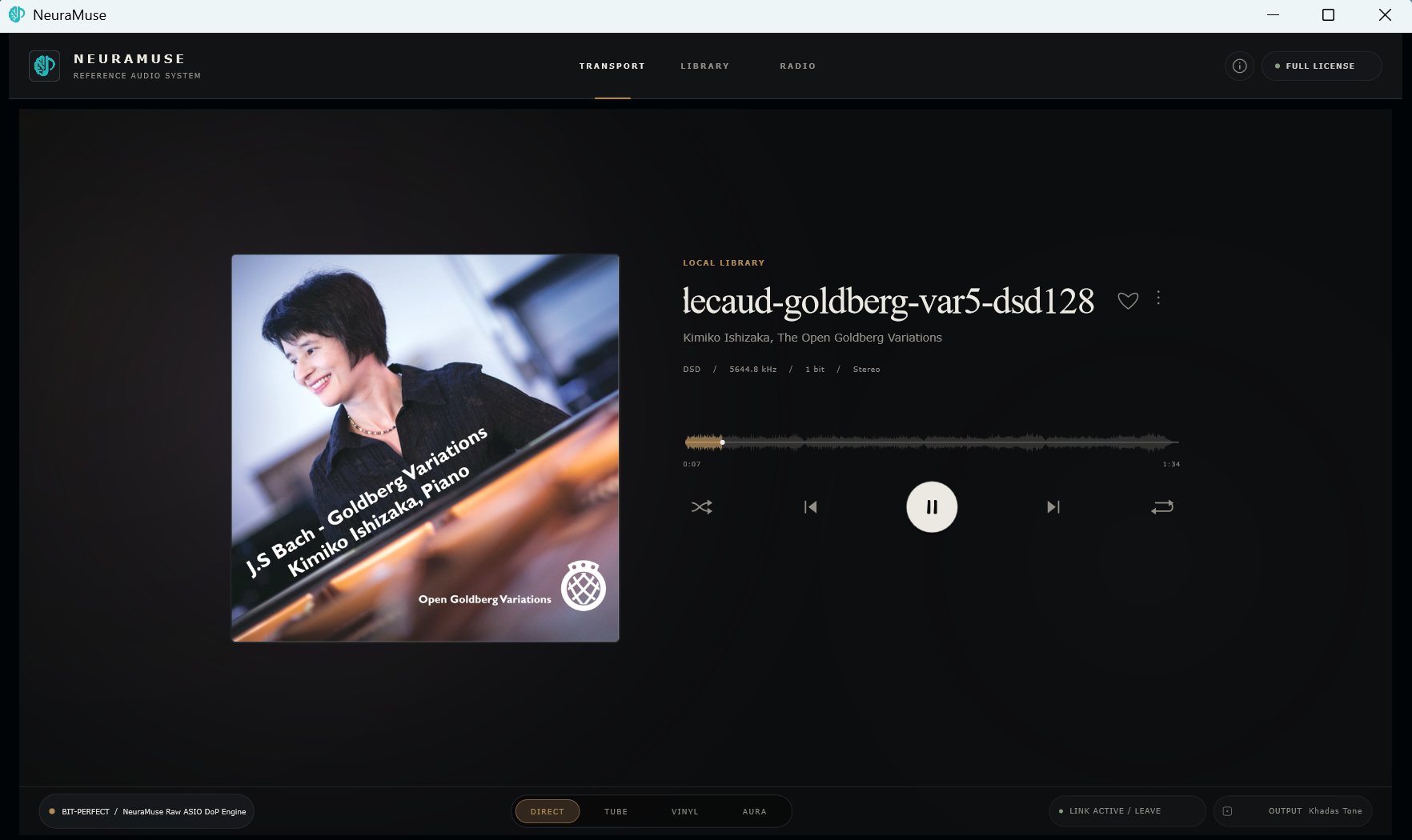
Windows ↔ macOS. The screenshots show one direction; the roles can be swapped.
Each endpoint keeps its own selected output device and platform audio path.
A real DSD128 hardware example is shown here; DIRECT DSD capability itself follows the DoP carrier accepted by each DAC/driver endpoint.
Beyond the signal path
The things you use every day are still one click away.
Library, Internet Radio, waveform, source format, active engine, output device, room state and live transport telemetry share the same workspace.
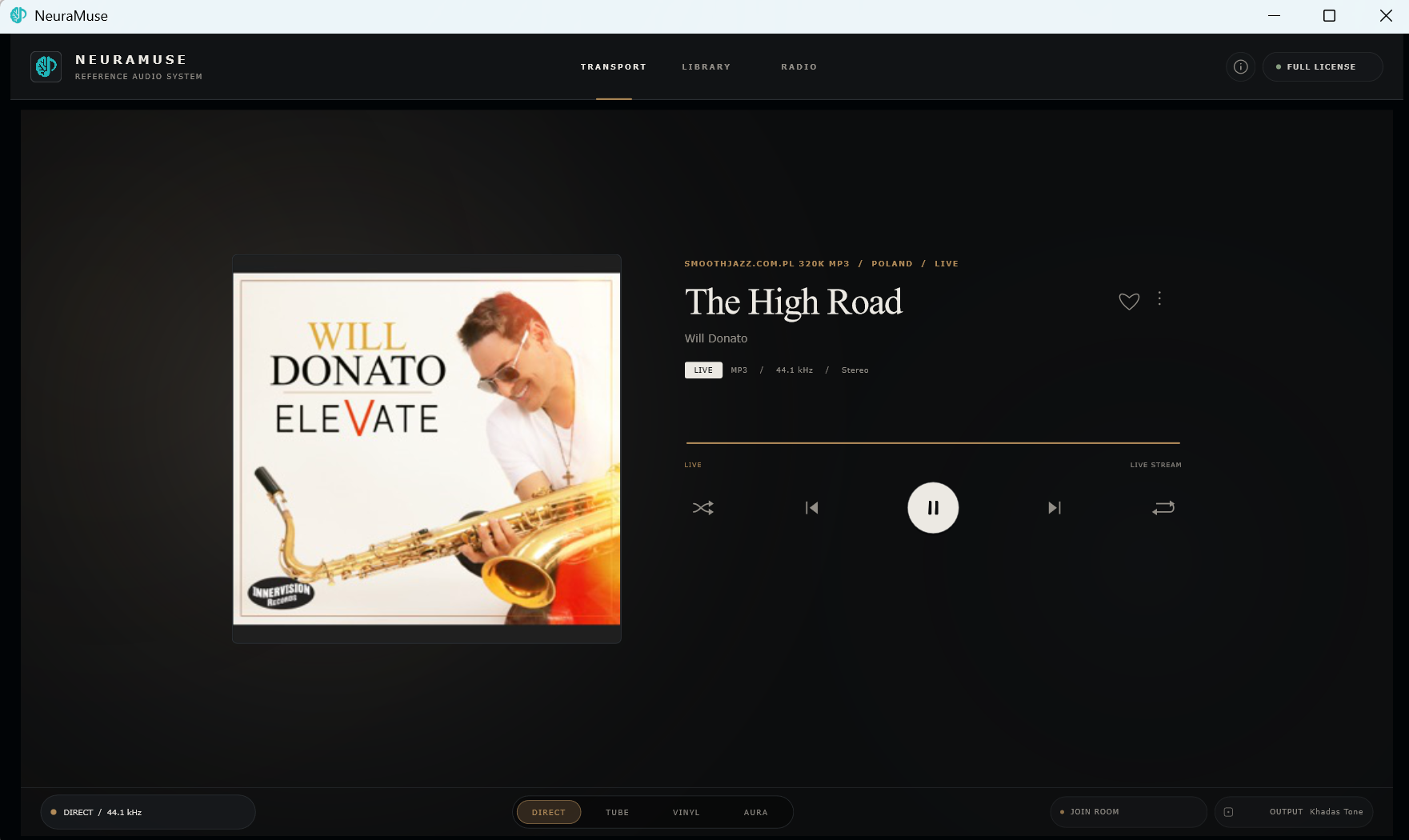
TRANSPORT
One view for the playback chain.
Track information, waveform, format, engine, DAC/output and transport evidence remain visible around the music.
LIBRARY
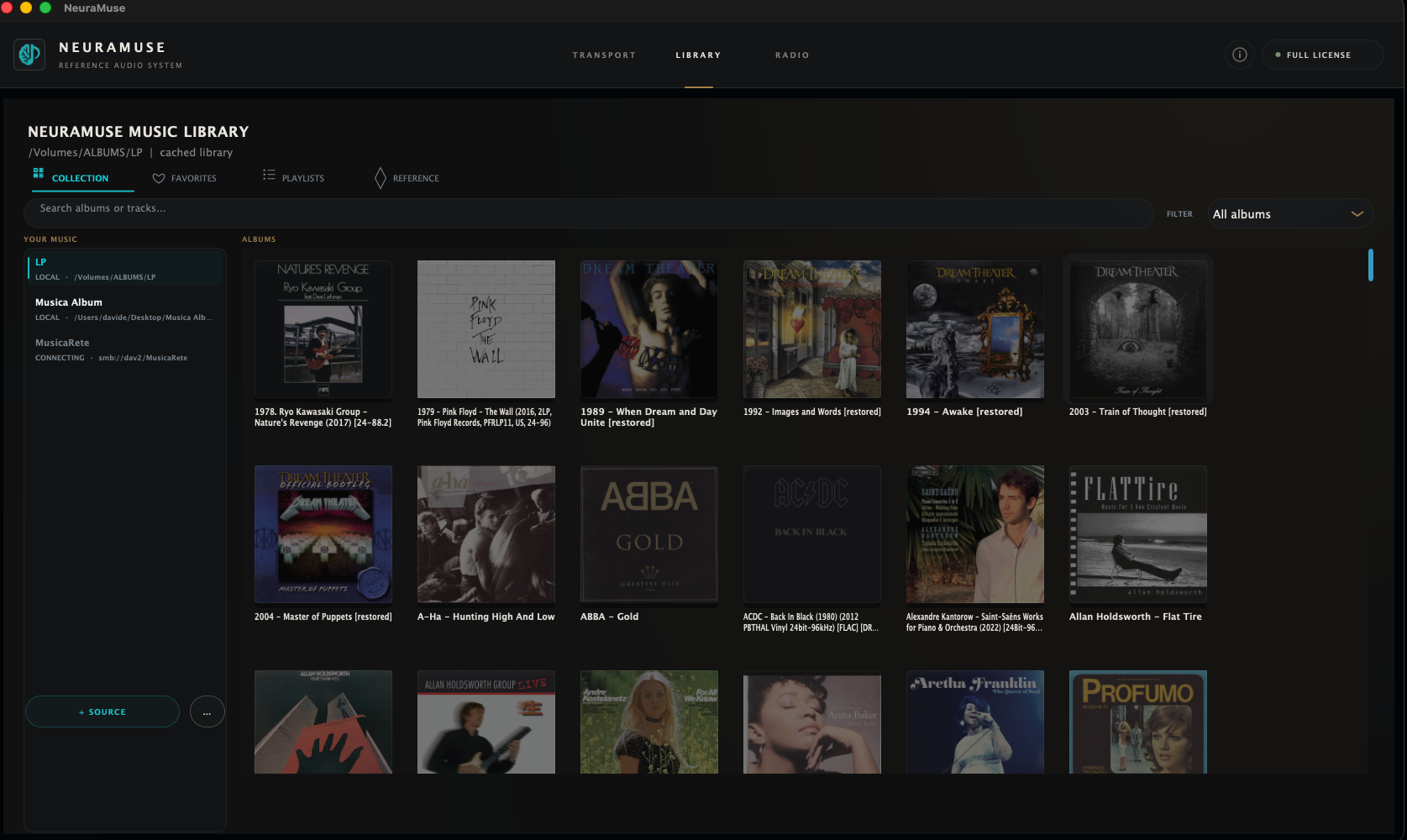
Your collection inside NeuraMuse.
Browse albums and tracks without losing transport context.
INTERNET RADIO
Radio joins the same transport.
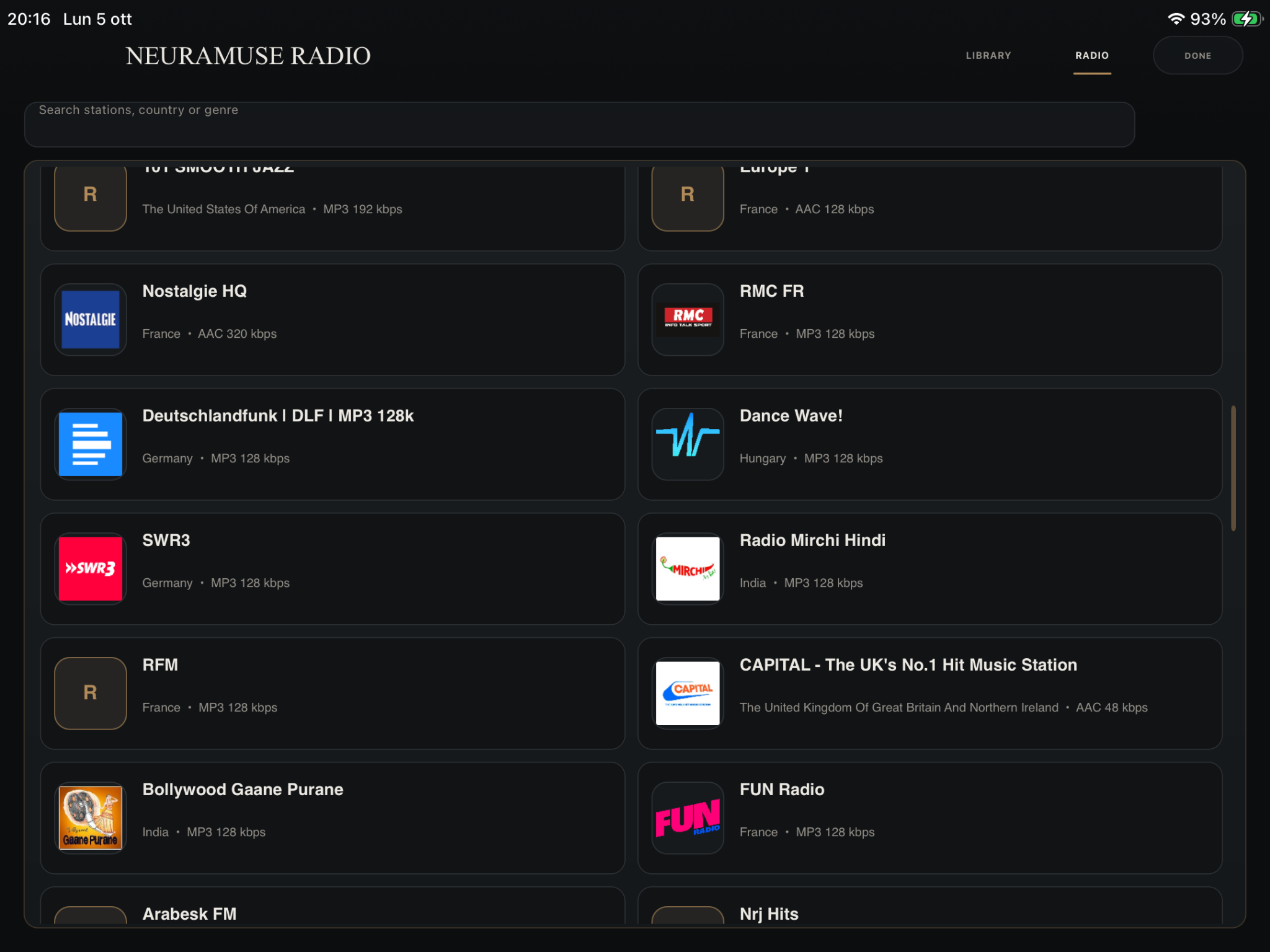
Internet Radio sits beside the local library and can also become a LINK source.
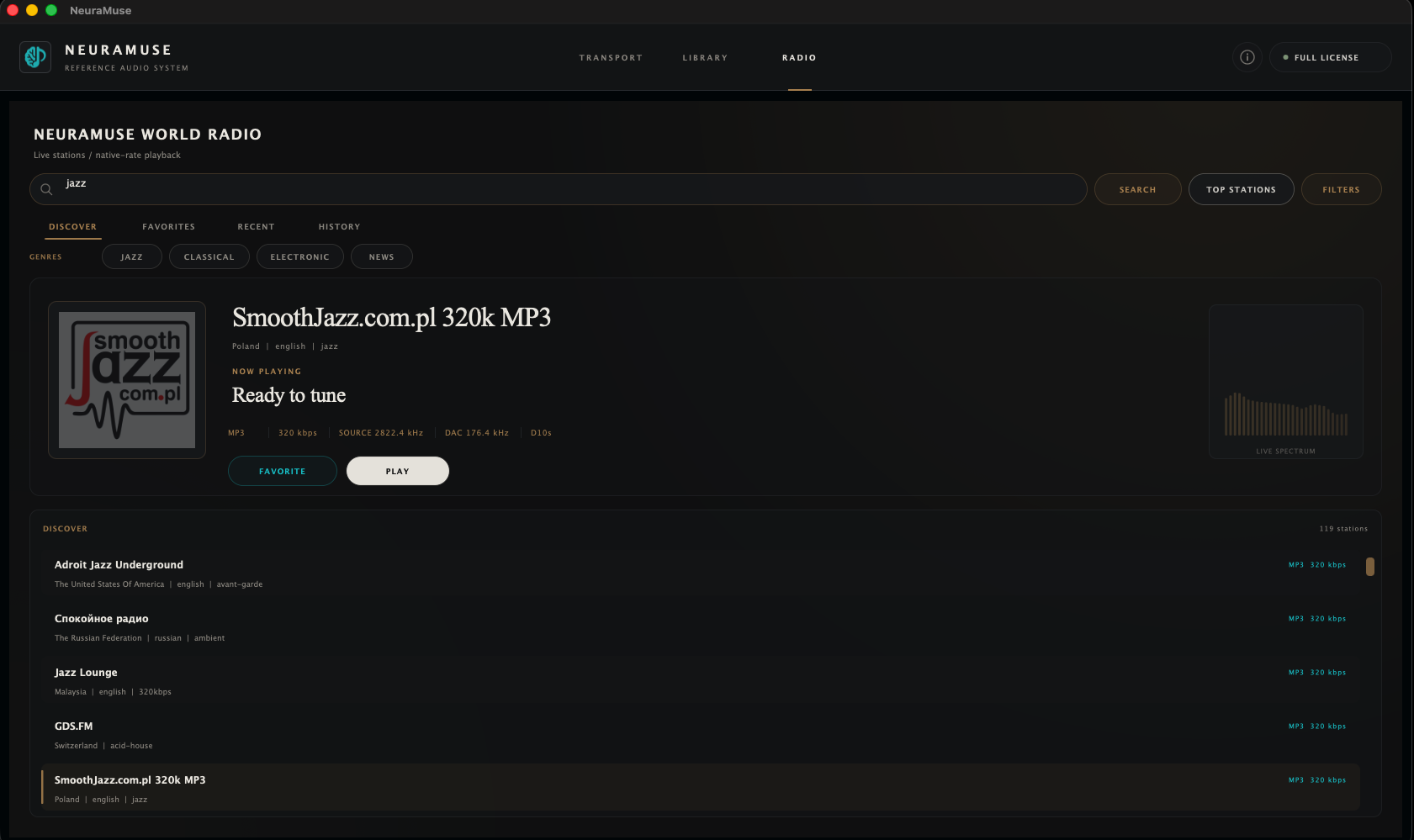
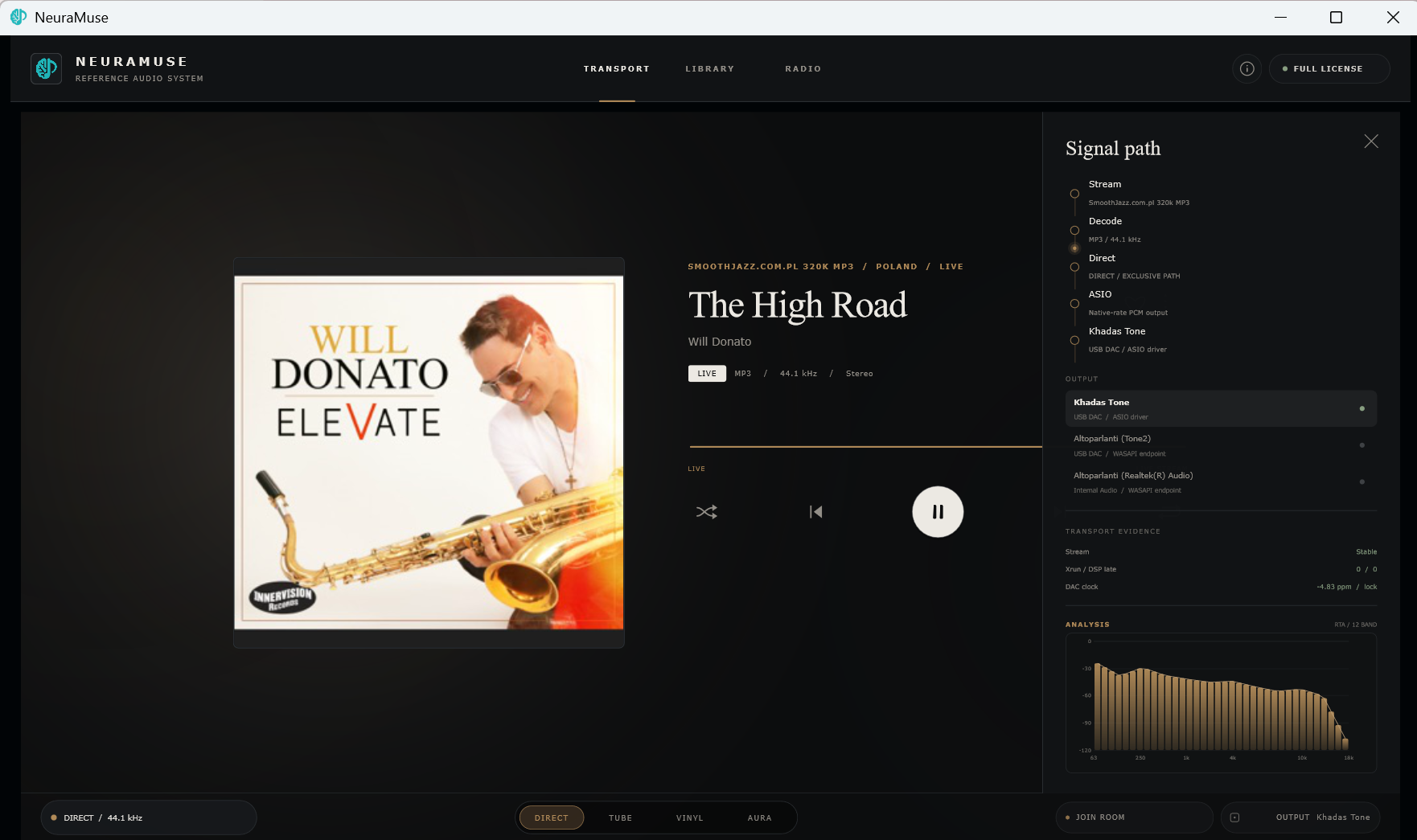
Same visual system on both desktops
macOS and Windows now speak the same language.
The current desktop generation uses the same listening-first layout on both platforms while keeping each platform's native audio path visible.
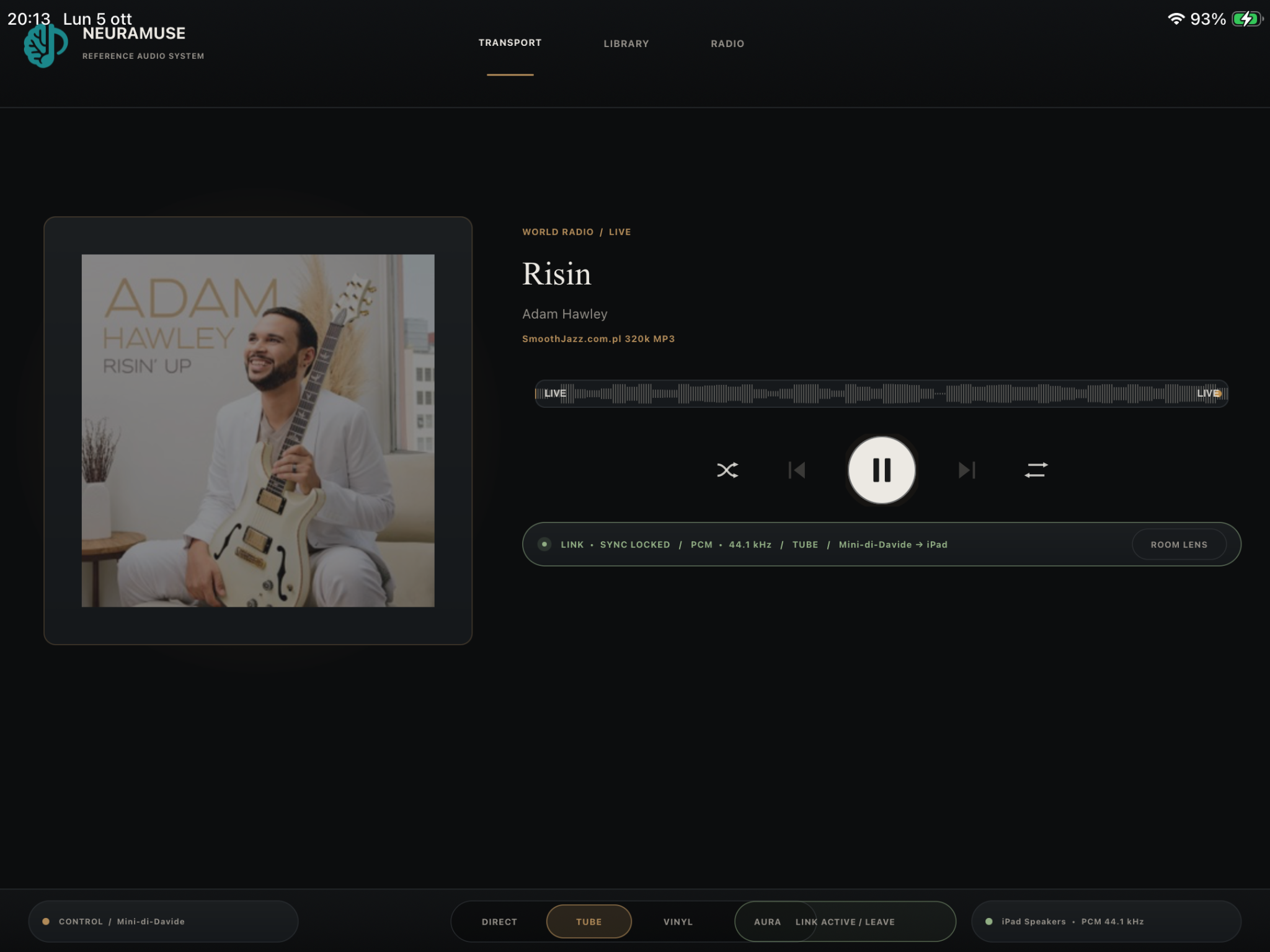
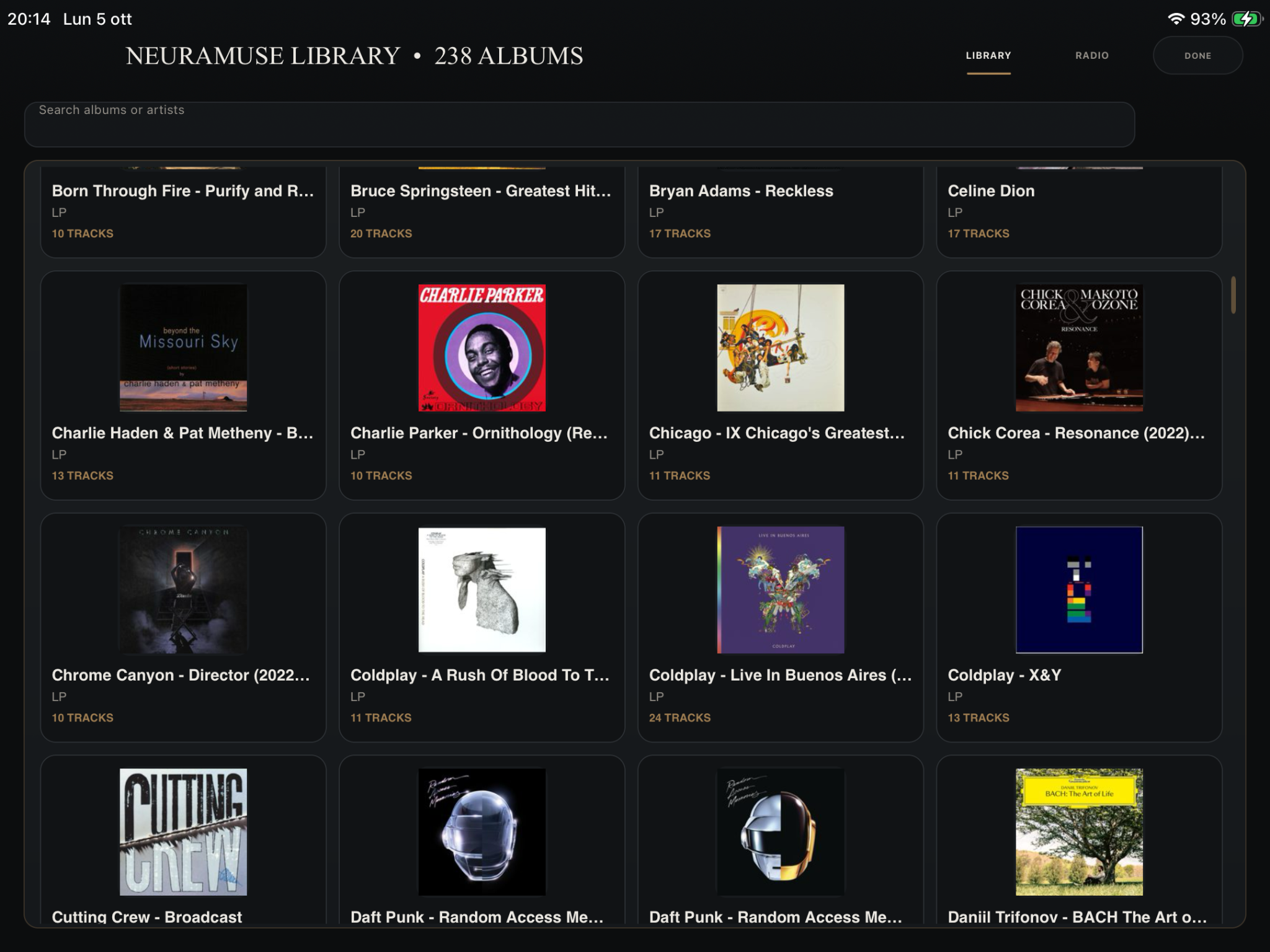
NeuraMuse for iPad · Public Beta
Touch the Master. Or join the room and listen.
Control a NeuraMuse Master on Windows or Apple Silicon macOS, browse Library and Radio, switch listening modes, then use the iPad itself as a synchronized LINK endpoint.
LIBRARYRADIODIRECT · TUBE · VINYL · AURALINK ENDPOINT
Public beta through Apple TestFlight. No NeuraMuse account, e-mail registration or licence activation is required. TestFlight is free; install it from the App Store if needed, then accept the public invitation.
Technical evidence · when you want it
Go deeper into formats, verification and platform details.
Open any section below for detailed PCM/DSD evidence, bit-perfect verification and platform audio-path information for Windows and macOS.
PCM / DSDFormat state remains visible from the player to real hardware.+
The three examples below pair the current NeuraMuse interface with real DAC readouts. The PCM captures show VINYL running at the source native rate — 96.0 kHz and 192.0 kHz — while the external D10s independently reports the matching PCM rate. The DSD128 example uses DIRECT: NeuraMuse reports 5.6448 MHz / 1 bit and the real DAC reports 5.64 DSD.
96.0 PCMCurrent UI + real DAC
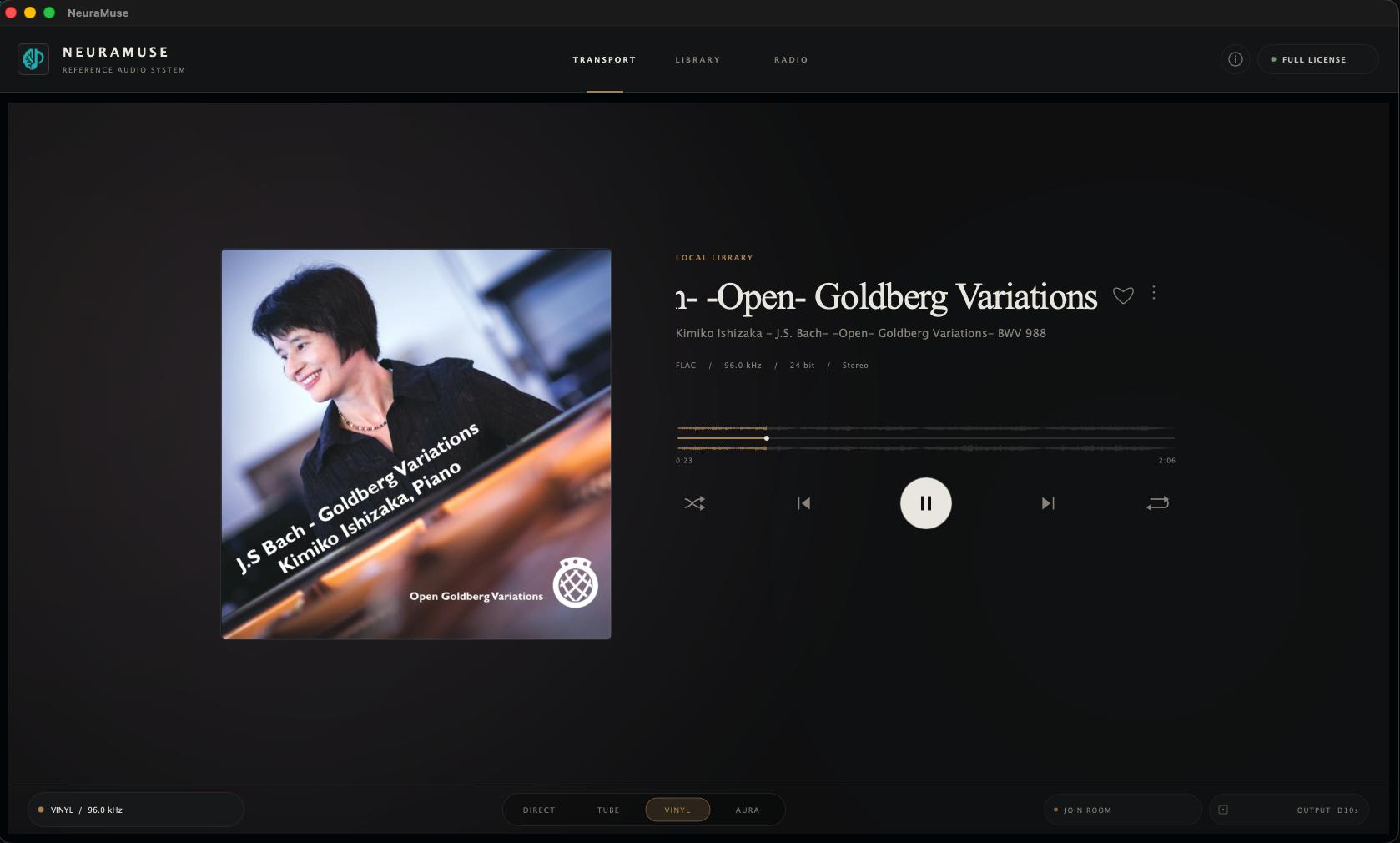
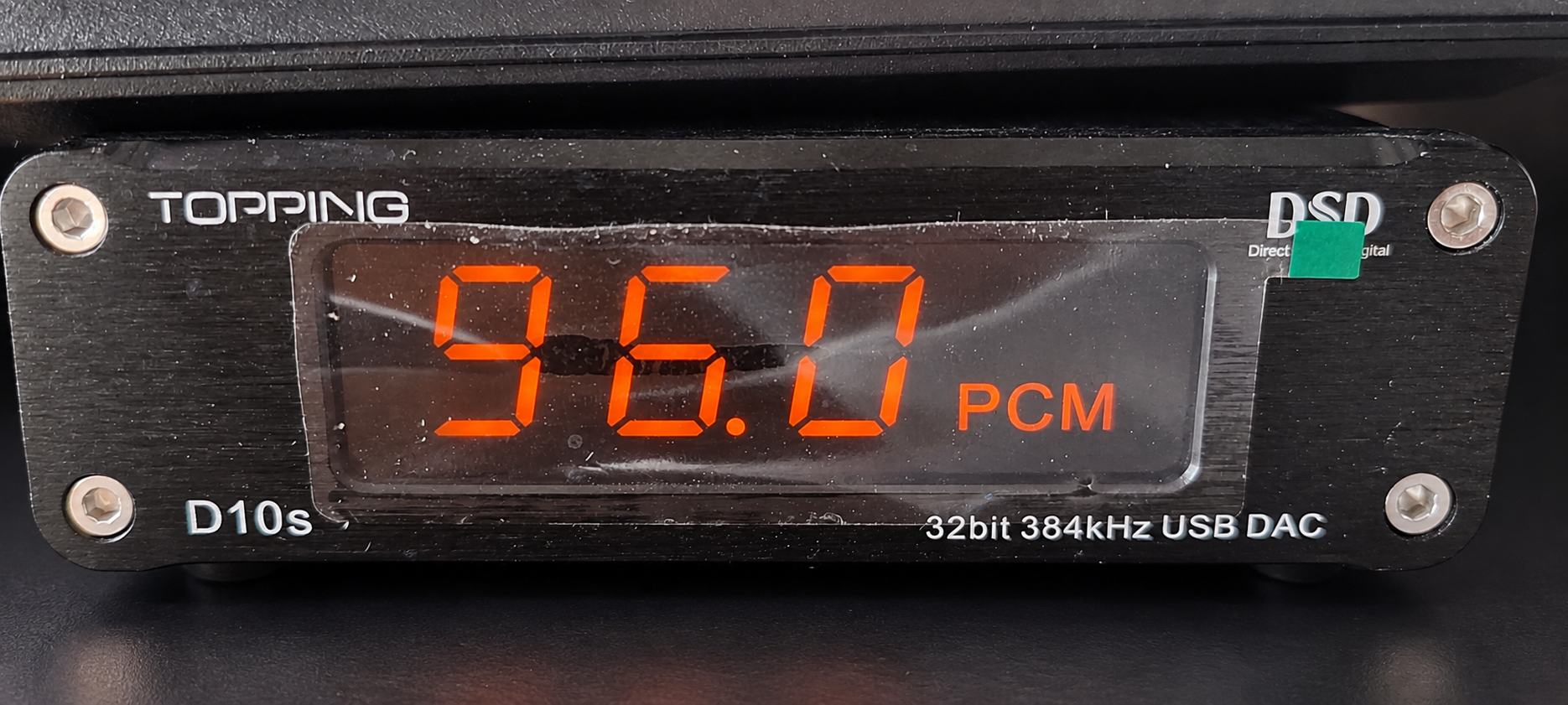
Current UI: FLAC 96.0 kHz / 24 bit with VINYL at 96.0 kHz. Real hardware validation: 96.0 PCM.
192 PCMCurrent UI + real DAC
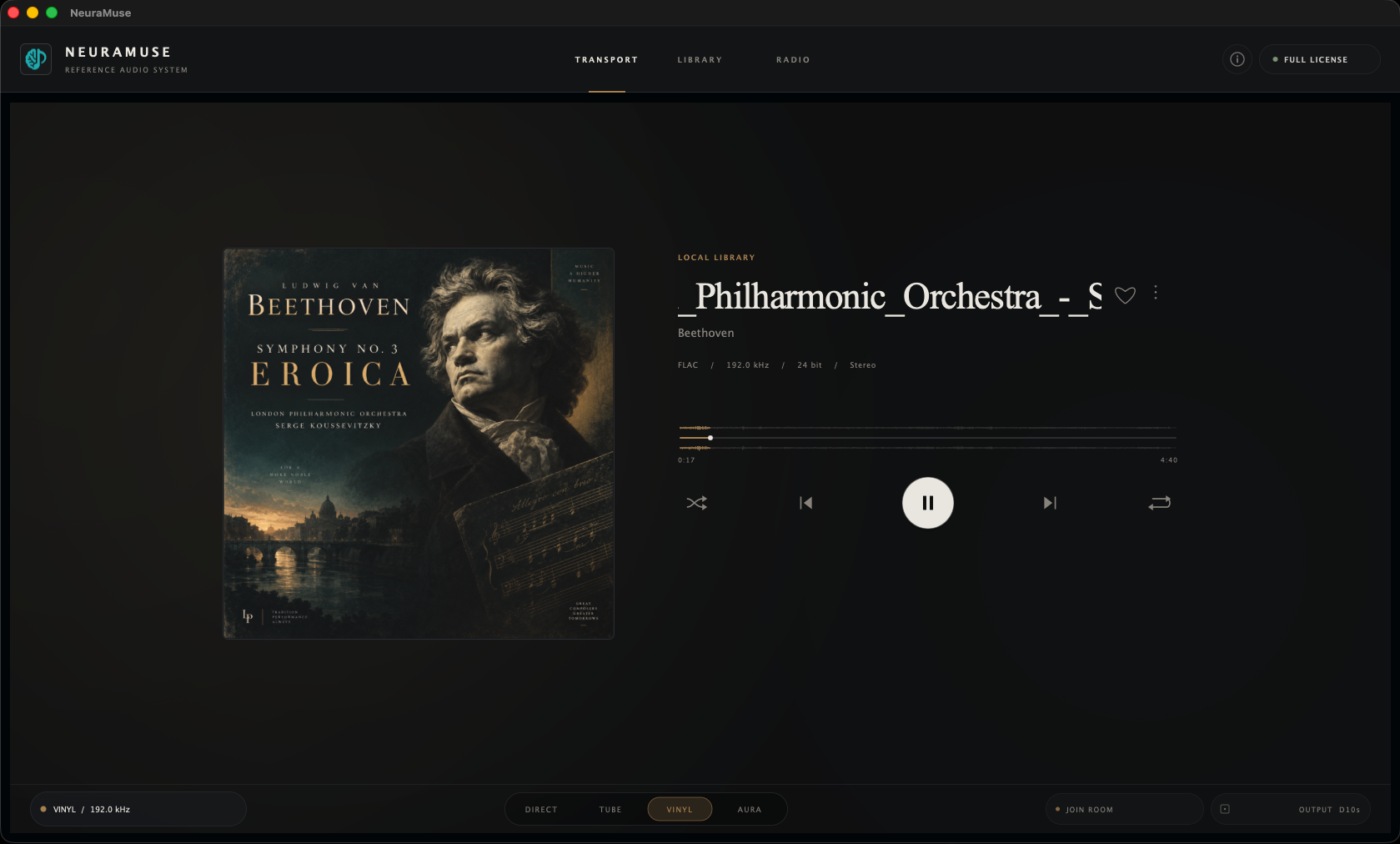
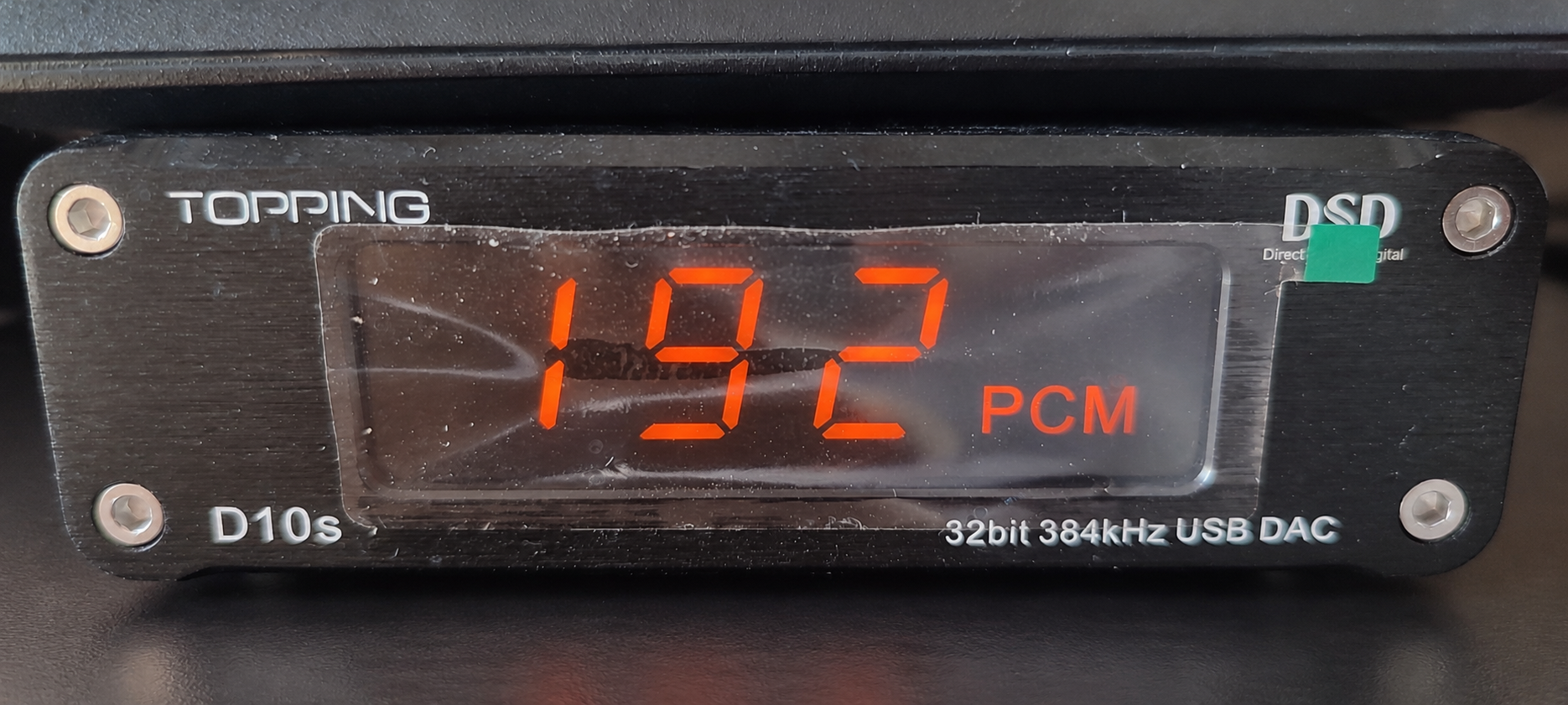
Current UI: FLAC 192.0 kHz / 24 bit with VINYL at 192.0 kHz. Real hardware validation: 192 PCM.
5.64 DSDCurrent UI + real DAC
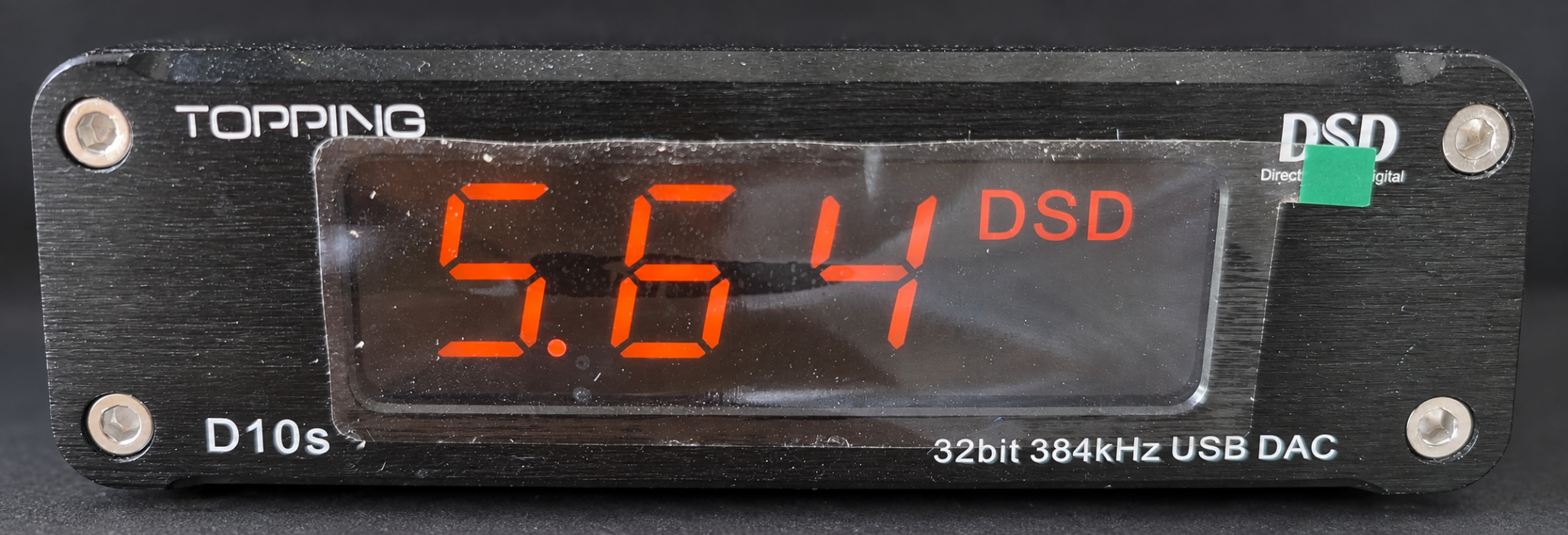
Current UI: DIRECT DSD128 / 5.6448 MHz / 1 bit. Real hardware validation: 5.64 DSD.
CURRENT UI + REAL DAC VALIDATION · PCM 96 / PCM 192 / DSD128 5.64
BIT-PERFECT VERIFICATIONWhat the current Transport Evidence shows.+
CURRENT LIVE STATEBIT-PERFECT · PAYLOAD PRESERVED
5.6448 MHz DSD · LINK MASTERReference path visible
DIRECT, DoP/CoreAudio and the selected DAC remain visible in the current Signal path.
Live payload state visible
Transport Evidence reports the payload-preserved state together with XRUN / DSP late and DAC-clock telemetry.
End-of-track verification remains part of the engine
Supported DIRECT paths can perform the final SHA-256 payload comparison at track completion; this current capture is intentionally labelled only with the live evidence it actually shows.
For DSD/DoP, payload verification is performed on the preserved DSD channel payload before DoP framing. A payload-preserved or SHA-256 match state does not override the endpoint output state: a room using PCM Compatibility must still be described as PCM, not bit-perfect DSD.
TECHNOLOGYNative desktop audio on Windows and macOS.+
WASAPI standalone · native ASIO reference
Standalone PCM can use the active Windows audio output automatically. A dedicated DAC/interface with its manufacturer-provided native ASIO driver enables the full Windows reference path, DIRECT DSD/DoP and LINK multiroom.
CoreAudio transport
Apple Silicon Macs use CoreAudio. Intel Macs are not supported by the current Early Access build.
WAV · FLAC · MP3 · DSF · DFF
PCM and DSD output follow the selected hardware. DIRECT DSD is advertised up to DSD256 and remains bit-perfect when the local DAC/driver accepts the required DoP carrier. In LINK, an incompatible joined endpoint may use clearly reported PCM Compatibility rather than being presented as bit-perfect DSD.
End-of-track SHA-256 match
Supported DIRECT paths report the final payload hash result so bit-perfect preservation is verified, not merely labelled.
Windows / Apple Silicon Mac → Native audio path → DAC / output → Amplifier / active monitors
LINK: Windows or macOS can act as the Master, and the other platform can join as an endpoint while rendering through its own local audio device.
Early Access
Try NeuraMuse on your own system.
Start in DIRECT with your own DAC and music. Then decide whether TUBE, VINYL, AURA or LINK earns a place in your setup.
14-day Early Access trial · no payment or card required, and no automatic charge at the end. Need more time? Use the dedicated Trial Extension form. We ask only for your email, operating system and the exact computer name needed to identify the correct licence. If you are testing LINK on multiple desktop computers, list every machine whose trial must be extended. Requests are normally reviewed and applied within a few minutes of receipt.
WIN
Windows 10 / 11 x64
DOWNLOAD FOR WINDOWS
NeuraMuseSetup.exe
Standalone PCM: no external DAC is required; NeuraMuse can use the active Windows output through WASAPI. Full reference / DSD / LINK: use a compatible dedicated DAC or audio interface with its manufacturer-provided native ASIO driver.
NeuraMuseSetup.exe · Windows Early Access · unsigned installer
SmartScreen may show “unrecognized app” on first install · verify SHA-256 before running
SHA-256: loading…
MAC
macOS · Apple Silicon only
DOWNLOAD FOR macOS
NeuraMuse.dmg
Uses CoreAudio — no ASIO driver required. For standalone playback, system audio may be used where supported; for desktop LINK, this Mac must have its own compatible DAC/audio interface. Apple Developer ID signed and notarized.
NeuraMuse.dmg · Apple Silicon Early Access · Apple Signed & Notarized
SHA-256: loading…
Need the full setup procedure?Installation notes, current release status, checksums and platform-specific guidance remain on the Early Access page.
OPEN INSTALL NOTESFAQ
Questions before you install.
The detailed pages remain available for DIRECT, TUBE, VINYL, AURA, LINK, iPad and setup.
What is NeuraMuse?
NeuraMuse is an audio transport platform for Windows and Apple Silicon macOS with DIRECT playback, TUBE and VINYL modelling, AURA room correction, Internet Radio and LINK multiroom. NeuraMuse for iPad is available as a public beta through Apple TestFlight for touch control and LINK listening.
Does NeuraMuse play PCM and DSD?
Yes. NeuraMuse supports PCM and DSD library playback. DIRECT DSD is advertised up to DSD256 and depends on the selected DAC/driver accepting the required DoP carrier: DSD64 176.4 kHz, DSD128 352.8 kHz and DSD256 705.6 kHz. In standalone playback, an unsupported carrier stops with a warning rather than being silently converted. In LINK, an incompatible joined endpoint may use the explicitly reported PCM Compatibility path.
What is DIRECT?
DIRECT is the reference playback mode and the baseline for format verification. DIRECT is required for bit-perfect playback, but the actual endpoint output still matters: a joined LINK endpoint may explicitly enter PCM Compatibility if its DAC/driver rejects the DoP carrier required by the DSD source.
Does DoP convert DSD to PCM?
No. DoP (DSD over PCM) frames the original DSD bits inside a PCM-compatible transport container so a compatible DAC can recognize and recover the DSD stream. The DSD payload itself is not converted to PCM. An actual DSD-to-PCM conversion occurs only when NeuraMuse explicitly reports a PCM processing or PCM Compatibility path.
Does the current desktop build use Native DSD or DoP?
The current Early Access DIRECT DSD path presents DSD to desktop DACs using DoP. On Windows, DIRECT DSD/DoP uses the selected hardware ASIO driver; this does not mean the transport is ASIO Native DSD. The Windows WASAPI fallback is PCM-only. On macOS, DSD is presented through DoP when the selected CoreAudio DAC path supports the required carrier.
Why can DIRECT show PCM with a DSD source in LINK?
If a joined endpoint DAC/driver rejects the DoP carrier required by that DSD rate, NeuraMuse can keep that joined LINK endpoint playing through an explicit high-rate PCM Compatibility path. A warning states that the endpoint is no longer bit-perfect DSD for that track. Other compatible DIRECT endpoints are not changed.
What happens if I select DIRECT during a processed DSD track?
NeuraMuse keeps the current track on its processed PCM path. At the next track boundary, DIRECT retries the DSD/DoP output. The endpoint returns to bit-perfect DSD when its DAC/driver accepts the carrier required by that DSD rate; in LINK, an incompatible joined endpoint can instead enter the clearly reported PCM Compatibility path.
How does NeuraMuse verify bit-perfect playback?
On supported DIRECT paths, NeuraMuse compares the preserved channel payload with SHA-256. At the end of the track, a VERIFIED / SHA-256 MATCH result confirms that the reference transport preserved the media payload bit-for-bit. For DSD/DoP, the comparison is made on the DSD channel payload before DoP framing. This verification does not re-label a PCM Compatibility endpoint as DSD: the actual output format shown for that endpoint remains authoritative.
Can Windows and macOS play in the same LINK room?
Yes. LINK roles are platform-independent: Windows can be the Master with macOS joined, or macOS can be the Master with Windows joined. Every participating desktop computer must have its own compatible DAC or audio interface connected and working before LINK starts. Two desktop computers = two DACs/interfaces.
Do I need a DAC on every computer for LINK Multiroom?
Yes — for desktop LINK, one compatible DAC/audio interface is required on every participating Windows or macOS computer. Built-in/system audio may be usable for supported standalone playback, but that does not make the computer ready for desktop LINK. On Windows, the DAC/interface must use its manufacturer-provided native hardware ASIO driver. The iPad endpoint is separate and renders through its own local iPad output.
Can a joined endpoint output DSD?
Yes, when that endpoint's DAC/driver accepts the required local DoP carrier. DSD64 requires 176.4 kHz, DSD128 352.8 kHz and DSD256 705.6 kHz. If a joined LINK endpoint rejects the required carrier, NeuraMuse warns the user and can convert only that joined endpoint to high-rate PCM Compatibility while compatible rooms remain bit-perfect DSD.
What is required on Windows?
Windows 10 or 11 x64 is required. Standalone PCM can use the active Windows output through WASAPI. For DIRECT DSD/DoP and NeuraMuse LINK multiroom, each Windows room needs a compatible dedicated DAC or audio interface with its manufacturer-provided native ASIO driver. Built-in/system audio remains on WASAPI, and software wrappers such as ASIO4ALL/FlexASIO are not treated as the dedicated reference driver. DIRECT PCM can be bit-perfect through native ASIO or WASAPI Exclusive when the exact source format is accepted; WASAPI Shared is a compatibility path and is not labelled bit-perfect.
What is required on macOS?
An Apple Silicon M-series Mac. NeuraMuse uses CoreAudio; Intel Macs are not supported by the current Early Access build. For desktop LINK Multiroom, that Mac must also have its own compatible DAC/audio interface connected and working.
Is NeuraMuse available on iPad?
Yes. NeuraMuse for iPad is available as a public beta through Apple TestFlight. No NeuraMuse account, registration, e-mail or licence activation is required. Join the iPad beta.
Do I need to register before downloading?
No. During the current Early Access phase the Windows and macOS desktop packages are available as direct downloads. The desktop software still requires internet access for first activation and periodic licence validation.
What happens when the 14-day desktop trial ends?
There is no payment, card requirement or automatic charge. If you need more evaluation time during Early Access, use the Trial Extension form. Enter your email, operating system and exact computer name; for LINK testing on multiple desktop computers, list every machine that needs an extension. Requests are normally reviewed and applied within a few minutes of receipt.
Where are installation notes and SHA-256 checksums?
The Early Access page contains the platform-specific installation procedure, security notes and current SHA-256 checksums.
Listen on your system
Start with DIRECT. Everything else is your choice.
NeuraMuse Early Access is available for Windows and Apple Silicon macOS. The iPad public beta is available through TestFlight.